
Australian Seafood Industries (ASI) is transitioning from traditional family-based selection to a fully operational genomic selection framework. Working in collaboration with the Center for Aquaculture Technologies (CAT), the University of Tasmania, and supported by funding from the Fisheries Research and Development Corporation (FRDC), this work represents an advanced implementation of genomics in a commercial molluscan breeding program. Initial analyses suggest meaningful improvements in selection accuracy, particularly for traits that are difficult or expensive to measure directly.
What is Genomic Selection, and Why Does It Matter?
Genomic selection is a method that uses dense DNA marker information to predict the genetic potential of individual animals. In practical terms, it allows us to make more accurate breeding decisions earlier and with greater precision.
Traditional family-based breeding relies on estimated breeding values (EBVs), which are based on family performance. While effective, this approach limits resolution, particularly for complex traits like disease resistance or thermotolerance, because it cannot distinguish between individuals within the same family.
Genomic selection addresses this by calculating genomic estimated breeding values (GEBVs) at the individual level. This enables within-family selection and allows us to capture genetic variation that was previously inaccessible.
The transition to genomic selection allows the ASI program to capture unrealised genetic gain that already exists within the population. It also removes the constraint of selecting the best families, enabling identification and propagation of the highest-performing individuals within those families, fundamentally increasing the rate of genetic improvement.
-
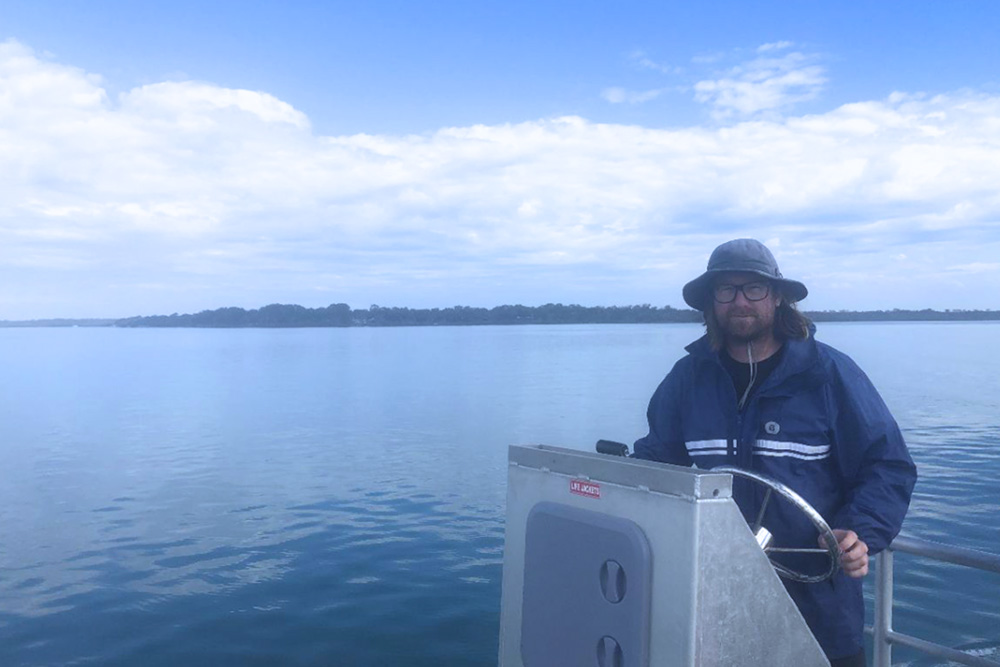
- Henry Hewish, General Manager, ASI
From Traditional Breeding to Genomics-Driven Decisions
ASI’s breeding program has historically delivered steady genetic gains in traits such as growth rate, survival, shell shape, and condition. The transition to genomic selection is expected to significantly accelerate these gains by improving selection accuracy.
Initial analyses already suggest meaningful improvements, particularly for traits that are difficult or expensive to measure directly. Importantly, genomic selection also supports the maintenance of genetic diversity by enabling selection across a broader range of families, an essential factor for long-term sustainability and resilience.
Building the Foundation: Data and Models
Over the past year, ASI, CAT, and the University of Tasmania have established a multi-year reference population that combines phenotypic and genomic data. This dataset underpins genomic prediction models and ensures accurate GEBVs across traits and environments.
Broodstock populations have also been genomically characterised, with pedigree verification and genotype imputation to a common marker set. These data are integrated into single-step genomic best linear unbiased prediction (GBLUP) models, which combine genomic and pedigree information while maintaining continuity with historical data.
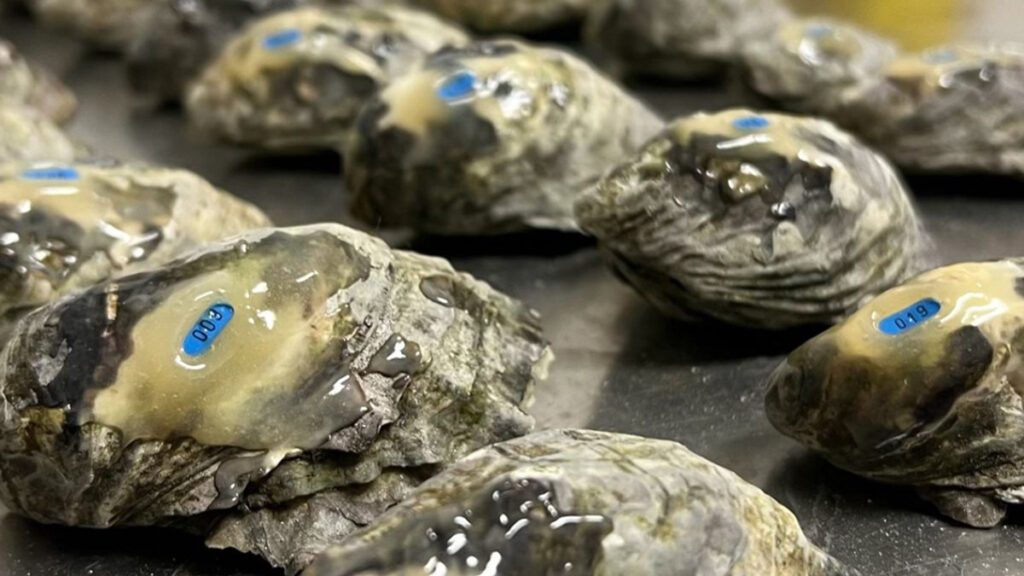
ASI© Broodstock preparing for Genotyping – tagged
Adapting Operations for Genomic Selection
Implementing genomic selection requires more than new data, it requires operational change. Tissue sampling, tagging, and genotyping workflows have been aligned with commercial hatchery timelines. At the same time, spawning protocols have shifted from family-based to individual-based designs.
Why Oysters Are Well Suited to Genomic Selection
The scientific basis for genomic selection is well established. In terrestrial livestock, it has become the dominant breeding approach due to its ability to increase accuracy and accelerate long-term genetic gain.
Oysters are particularly well suited to these methods due to their high fecundity. However, molluscan systems also present unique challenges, including:
- The need for lethal phenotyping for certain traits
- Strong genotype-by-environment interactions
- Complex disease pressures such as Pacific Oyster Mortality Syndrome (POMS)
Despite these challenges, the ASI program has made strong progress since POMS reshaped breeding objectives in 2013.
Early Results and What Comes Next
Early results are promising. Genomic prediction models for survival and performance traits are now in place for both South Australian and Tasmanian populations, supported by thousands of genotyped individuals and hundreds of parental families.
Looking ahead, the next phase will focus on validating realised genomic gains under commercial conditions and refining prediction models as more data are incorporated. The ultimate goal is to deliver consistent, measurable improvements in productivity and robustness for oyster producers.
Bridging Research and Industry
What makes this work particularly significant is that it represents a shift from genomic selection as a research concept to a routine commercial tool.
The ASI program demonstrates that, with the right infrastructure and data pipelines, genomic selection can be implemented at scale in molluscan aquaculture.
This collaboration represents a significant step forward for shellfish genetics. By combining rigorous scientific methodology with practical implementation, the collaborative program is helping to bridge the gap between research and industry, shaping future approaches to Oyster breeding.
Note: The work described here relates to; Project 2023-113: Implement genomic selection within the National Pacific Oyster breeding program, and is supported by funding from the Fisheries Research and Development Corporation on behalf of the Australian Government.